Advanced Access Management
for secure authentication
One central control point for every identity and access right across your business systems. Audit-ready compliance, hosted in Germany under ISO/IEC 27001 & BSI C5.
What is Advanced Access Management?
Identity and Access Management explained
Advanced Access Management (AAM) is the modern term for Identity and Access Management (IAM): the centralized infrastructure that decides who logs in, what they can access, and on which systems. Instead of every application maintaining its own user database, password rules and audit log, AAM consolidates authentication and authorization into one layer that every connected service consumes.
A modern AAM platform speaks open standard protocols - OAuth 2.0, OpenID Connect (OIDC), Security Assertion Markup Language (SAML) - that every contemporary application can adopt without proprietary connectors. Around these protocols sit the operational features that grown system landscapes need: Single Sign-on, Multi-Factor Authentication, role-based access control (RBAC), session lifecycle management, and tamper-resistant audit logs.
With the NIS2 directive and its transposition into national law, AAM has become a regulatory requirement, not just an architectural choice.
Advanced Access Management
compared
- Outside Germany; CLOUD Act + FISA-702 apply
- Wherever you host it (your responsibility)
- German data centers only; no CLOUD Act, no FISA
- Managed by the vendor
- Entirely your IT team (patching, monitoring, HA, hardening)
- Fully managed by SecureCloud
- Commercial, but international
- No contractual liability
- Commercial SLA + liability under German law
- Strong (M365 / AWS ecosystem)
- None
- None - open standards (SAML, OIDC)
- Vendor certificates (international)
- Build it yourself
- BSI C5, ISO/IEC 27001 - ready to use
- Often in higher tiers
- Self-configured
- Out-of-the-box, AAM available as an add-on from Advanced upward
- International call centers, no German legal basis
- Community / self
- German support + legal basis
- Convenience, but sovereignty risk
- Sovereign, but operational risk
- Full sovereignty without the operational burden
One central control point
for every identity
Replace the patchwork
with one manageable infrastructure
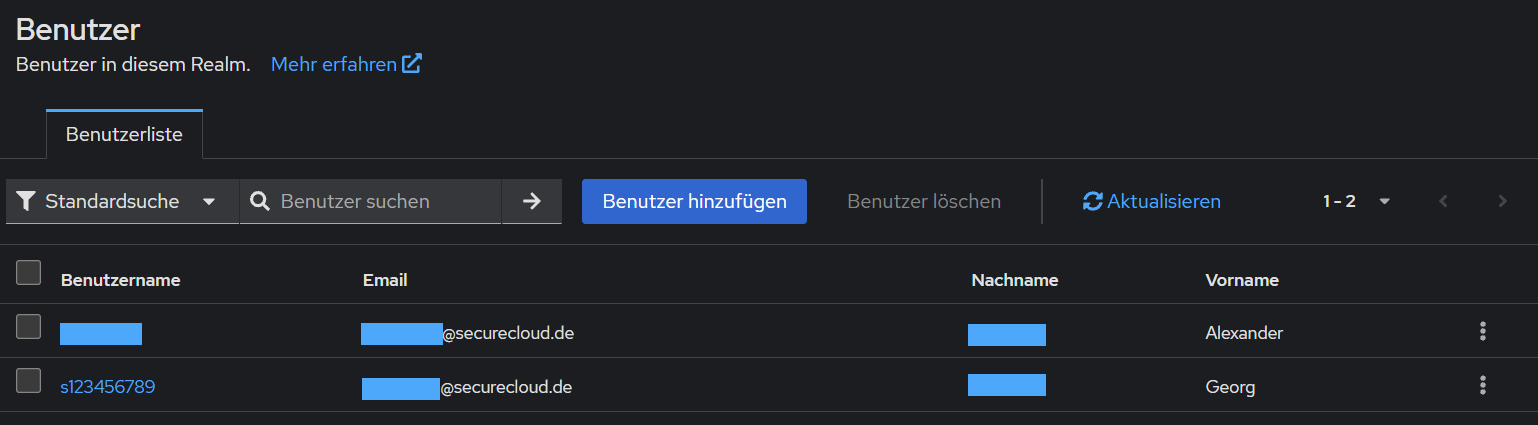
Authentication and access control in grown system landscapes turn into an uncontrollable, security-critical patchwork. Every service has its own user database, every team writes its own password rules, every audit exposes a new gap. Advanced Access Management replaces that fragmented mess with a single, manageable infrastructure.
Password policies, MFA requirements and session timeouts are enforced system-wide from one place. One change applies instantly to every connected application.
Effective risk prevention
through centralized access control
Compromised credentials are the most common cause of data breaches, and the trend is rising. Microservice and cloud architectures multiply the number of identities to manage. Remote work has dramatically expanded the attack surface for unsecured logins.
Without central access management, offboarding becomes a security risk: employees leave the company but their accounts remain active in individual systems. NIS2, ISO/IEC 27001 and GDPR audits cannot prove what was never centrally documented.
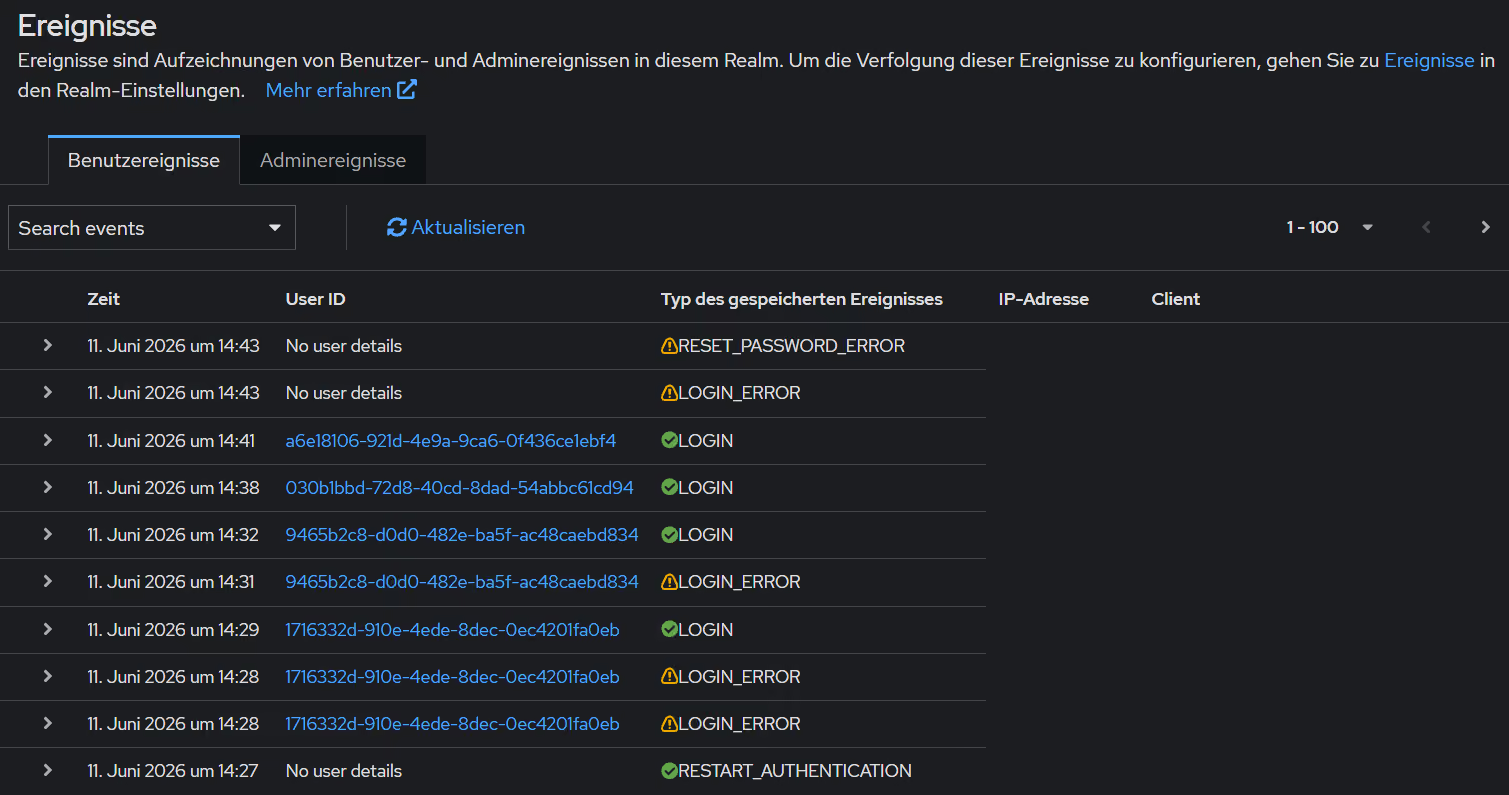
Advanced Access Management closes the gap: every login, every access, every change captured in one tamper-resistant log.
Find out more!
Our experts are happy to answer any questions you may have.
Sovereign authentication
for every system
Our solution:
centralized, audit-ready and sovereign
With Advanced Access Management we turn identity and access management into something manageable. The platform integrates seamlessly with cloud apps, Active Directory, LDAP and SaaS tools - whether on-premises, hybrid or fully in the cloud. The full service is hosted in Germany under GDPR and runs without any maintenance burden on your IT team.
- Layered security: Single sign-on, multi-factor authentication, system-wide password policies and session timeouts enforced from one central point. Compromised accounts get blocked everywhere with one click.
- Compliance built-in: Tamper-resistant audit logs satisfy GDPR and ISO/IEC 27001 requirements out of the box and support your NIS2 obligations with evidence. Audit reports in minutes instead of days, with no extra logging infrastructure.
- Reliability: Cloud-native architecture with automatic scaling. From small teams to enterprise environments with thousands of concurrent users, no architecture change required.
- Ease of use: Self-service for end users, delegated admin for team leads, REST API for automation. One password, every application, zero password fatigue.
Built for regulated industries
and modern teams!
- IT departments: Centralize identity and permission management across grown system landscapes.
- Compliance and security teams: Audit evidence for GDPR, ISO/IEC 27001 and NIS2 in minutes.
- Development teams: Stop rebuilding auth logic - integrate against a single, standards-based auth layer.
- HR and operations: Coordinate onboarding and offboarding across every connected application with one action.
- ... and regulated industries: financial services, healthcare, public sector, legal.

Typical use cases for AAM:From login to offboarding in one platform

Open standards,
full sovereignty!
Open protocols for
every modern stack
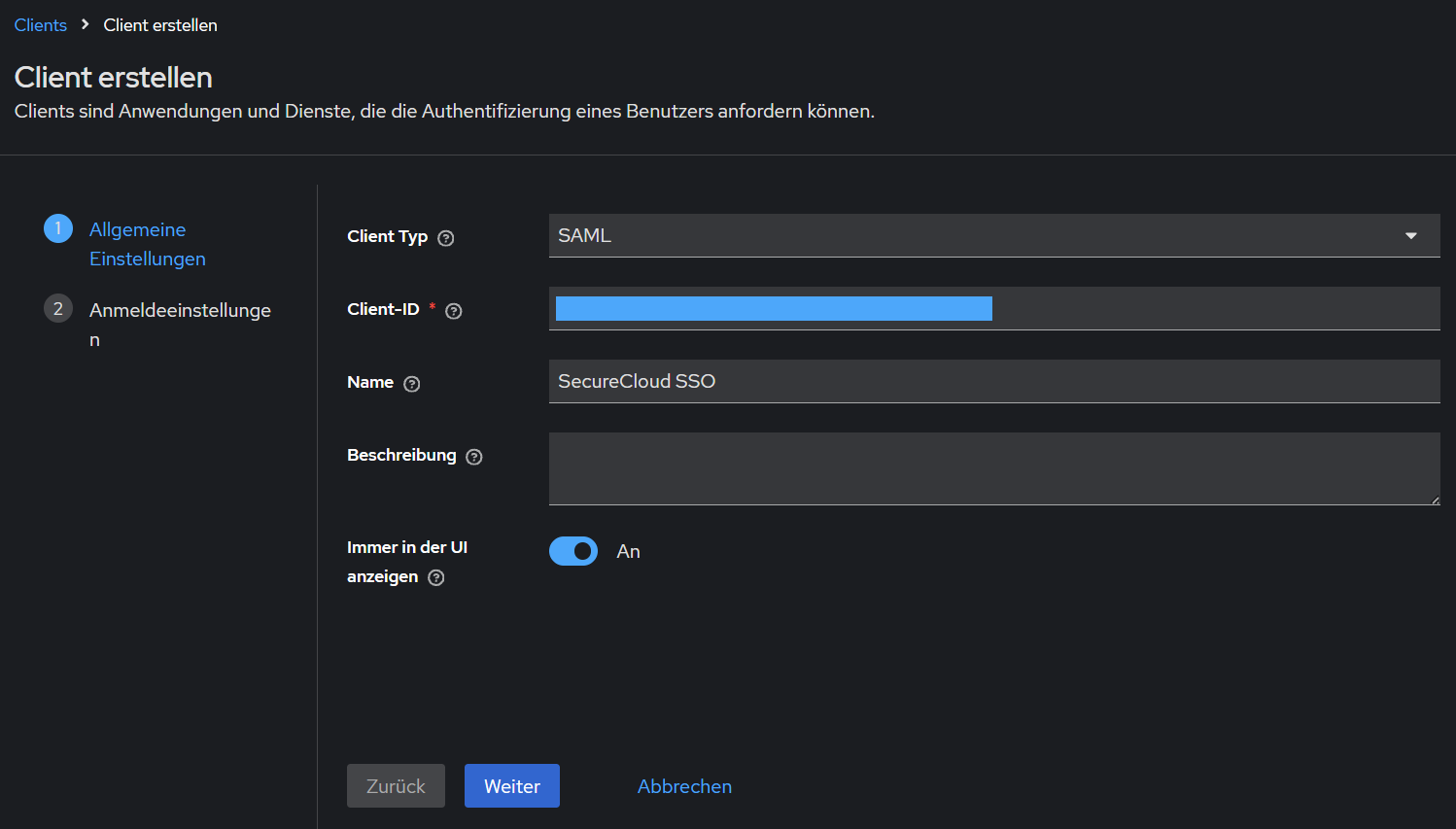
Advanced Access Management is built on OAuth 2.0, OpenID Connect and SAML 2.0 - the open standards every modern application speaks. No proprietary connectors, no vendor lock-in: connect Active Directory, LDAP, common SaaS services and your own applications in hours, not weeks.
The full administration interface is also available via REST API - for lifecycle automation across your CI/CD and HR systems. Because we operate the authentication infrastructure ourselves, we can deliver what generic IdP-as-a-Service providers can't: custom login flows, risk-based step-up authentication and login screens in the customer's corporate design.
Real-world example: for a leading German financial services provider with a hybrid workforce, we implemented a flow where employees receive an OTP code by email as a second factor - unless the login comes from the corporate VPN, in which case that step is skipped.
Data protection and data centers
based in Germany!
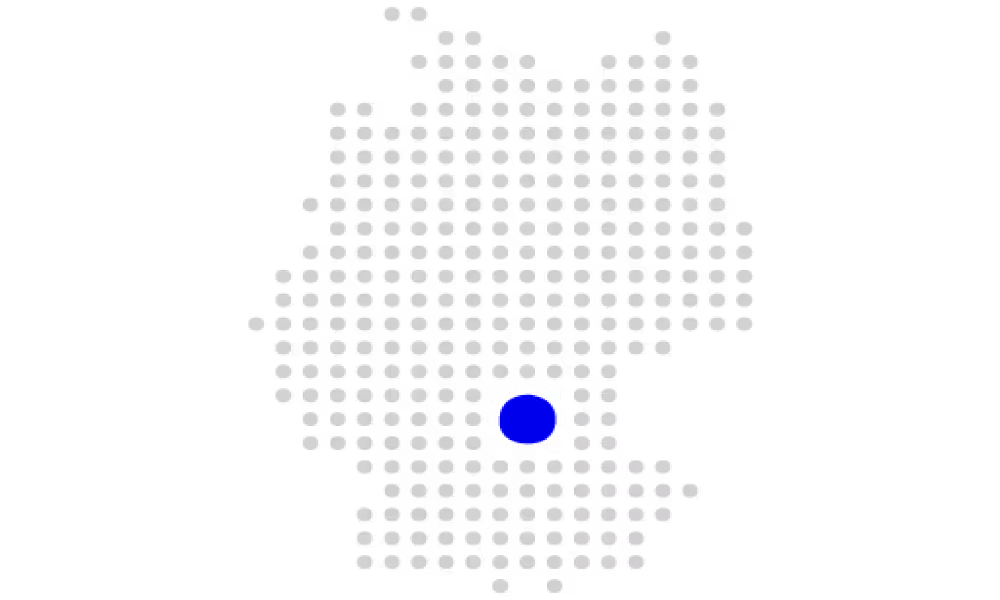
All identity and access data remains permanently in our German data centers. No transmission to third countries, no CLOUD Act risk, no FISA exposure.
GDPR compliance without additional contractual frameworks - a clear competitive advantage in public tenders and enterprise procurement. Every customer gets a fully isolated realm with its own users, roles, policies and configurations. Tenant separation is enforced at the infrastructure level, with no cross-customer visibility.
Your employees
will love SecureCloud!
One single sign-on covers email, project management, HR systems and document storage. No more password fatigue, no more re-authentication, no more support tickets for locked accounts. New hires get the right access on day one. Departing employees lose every access instantly. Productivity starts with the first click of the morning.
Find out more!
Our experts are happy to answer any questions you may have.
Our certificates


Cloud
Over 6,000 customers trust SecureCloud


.svg)


Frequently asked questions
Related terms
Data based in Germany
Data centers and company headquarters in Germany
Our promise: #nobackdoor