


ISO/IEC 27001 certified, BSI C5 attested from Advanced.
Checking a cloud provider takes more than logos. Here you find every credential with its issuer and number, plus the compliance matrix, the data processing agreement under Art. 28 GDPR and the list of subprocessors.
These organisations trust SecureCloud.



Each piece of evidence in detail: what it proves and what it does not.
Choose a piece of evidence. You see what it stands for, who audited it, where to verify it yourself and where its limits are.
The international standard for information security management systems (ISMS). It requires a systematic, risk-based approach to information security across the whole company.
- Issuer: TÜV Rheinland Cert GmbH
- Certificate no. 01 153 2300948, first certified 2024
- Annual surveillance audits by TÜV Rheinland
- Scope: development, provision and sale of the cloud storage solutions and further cloud and managed services
An ISMS certificate says nothing about the criteria of a specific cloud service. That is what the C5 attestation covers.
The criteria catalogue of the German Federal Office for Information Security (BSI) for cloud services. An audit firm assesses the provider against it and issues an attestation, not a certificate.
- Audit under IDW PS 860 by an independent audit firm
- Reference date 23 Mar 2025, unqualified opinion
- Scope: the SecureCloud SaaS services of the Advanced and Enterprise editions
- Criteria include organisation, operations, access management, cryptography, security incidents
An attestation assesses the state on the reference date. The report lists the duties that stay with the customer.
A directory of trustworthy cloud services. It is a listing with a label, not a certificate.
- Criteria catalogue on transparency, security, quality and law
- Binding commitment by the provider
- Entry publicly viewable
The listing does not replace an ISO/IEC 27001 or C5 audit. It shows that the minimum requirements are committed to and reviewed.
The CIS Benchmarks and CIS Critical Security Controls of the Center for Internet Security are recognised catalogues for securing IT systems.
- Hardening and baseline configuration of systems
- Access and vulnerability management, logging
- Implementation is reviewed regularly
CIS compliant describes alignment with the catalogues. It is not a certificate from an external body.
The General Data Protection Regulation governs the protection of personal data in the EU. As a processor, SecureCloud meets the duties under Art. 28 GDPR.
- DPA with every customer, signed digitally
- Technical and organisational measures as Annex 1
- Processing contractually limited to the EU and EEA
- External data protection officer
SecureCloud is GDPR compliant but not certified under a GDPR certification scheme. Your own duties as controller stay with you.
BSI C5 and ISO/IEC 27001 complement each other.
The certificate shows how the company manages information security. The attestation shows how the cloud service performs against the BSI criteria. Tenders often ask for both.
Data centers in Germany, with their own certificates.
The following certificates belong to the data center operators, not to SecureCloud. We list them separately so that your auditor can tell the layers apart.
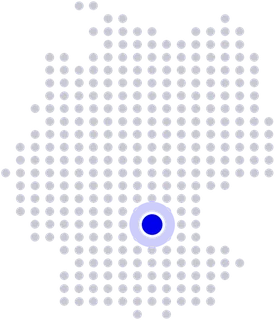
noris network AG, Nuremberg South
Hetzner Online GmbH
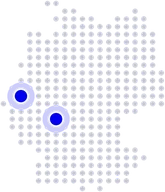
Backups
As of November 2026. The current subprocessor list is in our Trust Center.
Compliance matrix: each requirement with its evidence.
Choose your requirement. You see what the law asks for, what SecureCloud provides, which document you get and what stays with you.
Under Art. 28 GDPR you may only use processors that provide sufficient guarantees, and you sign a contract with them.
- Sign the DPA digitally
- Technical and organisational measures as Annex 1
- Processing contractually limited to the EU and EEA
- Permissions per person and folder
Keep your record of processing activities and define legal bases and deletion periods.
Under § 30 of the German BSI Act (BSIG), essential and important entities must take risk management measures. These include supply chain security, which covers your cloud providers.
- ISO/IEC 27001:2022 certificate
- Audit opinion on the C5 attestation for Advanced and Enterprise customers on request
- Reporting channels for security incidents
- Subprocessor list
Check whether your organisation falls under NIS2, and set up your own risk analysis and reporting processes.
DORA, Regulation (EU) 2022/2554, requires financial entities to bind their ICT third-party providers by contract. Art. 30 sets out the key contractual provisions.
- Minimum terms under Art. 30(2) agreed on request
- Additional terms under Art. 30(3) for critical or important functions, case by case
- Audit log export from Advanced
Add the service to your register of ICT third-party providers and assess whether it supports a critical or important function.
§ 203 of the German Criminal Code protects secrets entrusted to lawyers, tax advisers or doctors. Service providers may be involved. Under § 43e BRAO and § 62a StBerG, the contract needs to be in text form.
- Data centers and backups in Germany
- Permissions per person and folder
- Links with password and expiry date, revocable at any time
- External parties without an account of their own
Select the provider carefully, bind it to confidentiality in text form and only disclose what the service requires.
Public sector buyers often require an attestation against the BSI C5 criteria catalogue and data storage in Germany.
- BSI C5 attested (Advanced and Enterprise)
- Listed in the Trusted Cloud directory
- Data centers and backups in Germany
- Provider without a US parent company
Define the protection needs of your data and follow the customer notes in the C5 report.
Legal status: November 2026. The matrix is not legal advice.
Documents for your assessment and how to get them.
Public evidence is on this page and in our Trust Center. Advanced and Enterprise customers receive the audit opinion on the C5 attestation on request, and the data protection concept after a confidentiality agreement.
Subprocessors, involved in processing.
We keep the current list in our Trust Center, where you always see the latest version and can subscribe to changes by email. We announce changes or new subprocessors in advance in text form or in the Trust Center. Under our DPA, you can object to a planned change.
How to use the evidence in your assessment.
Check the certificate with the issuer
On Certipedia you see the status, validity and scope of the ISO certificate, directly from TÜV Rheinland.
Request the audit opinion
As an Advanced or Enterprise customer, you receive the audit opinion on the C5 attestation on request.
Link evidence to obligation
The compliance matrix shows which evidence covers which obligation under GDPR, NIS2 or DORA.
Why customers choose SecureCloud. In their own words.
“For our platform decision it was clear: no third countries, no grey areas, no compromises on data control.”
“There can be no grey area, neither technical nor legal.”
Frequently asked questions about security and evidence.
Which certifications and attestations does SecureCloud hold?
SecureCloud is ISO/IEC 27001:2022 certified (TÜV Rheinland, certificate no. 01 153 2300948), BSI C5 attested for the Advanced and Enterprise editions (reference date 23 Mar 2025), listed in the Trusted Cloud directory, CIS compliant and GDPR compliant.
How can I verify SecureCloud's ISO 27001 certificate?
On Certipedia, the public register of TÜV Rheinland, under certificate no. 01 153 2300948. There you see status, validity and scope. You can request a copy of the certificate.
What is the difference between BSI C5 and ISO/IEC 27001?
ISO/IEC 27001 certifies a company's information security management system. BSI C5 assesses a cloud service against the BSI criteria catalogue, and the result is an attestation by an audit firm. The two complement each other, and public sector buyers often require both.
Is SecureCloud BSI C5 certified?
SecureCloud is BSI C5 attested for the Advanced and Enterprise editions. C5 has no certification: an audit firm assesses under IDW PS 860 and issues an attestation. The attestation for the SecureCloud SaaS services has the reference date 23 March 2025 and an unqualified opinion.
Is Trusted Cloud a certificate?
No. Trusted Cloud is a directory of trustworthy cloud services. SecureCloud is listed in the Trusted Cloud directory.
Is SecureCloud GDPR certified?
SecureCloud is GDPR compliant but not certified under a GDPR certification scheme. The evidence is the DPA under Art. 28 GDPR with the technical and organisational measures, the subprocessor list and processing limited to the EU and EEA.
Which certificates do the data centers hold?
SecureCloud runs its services in the Nuremberg South data centre of noris network AG and at Hetzner Online GmbH. Both are ISO/IEC 27001:2022 certified. The Nuremberg South data centre is also certified to EN 50600 VK4 SK4 GN2, ISO/IEC 22237 and TÜV NORD TSI.STANDARD L4, among others, and is operated as critical infrastructure (KRITIS). These certificates belong to the data centres. Backups are stored in Frankfurt am Main and Düsseldorf.
How do I find a cloud provider that supports NIS2 and DORA?
Ask for evidence you can check: an ISO/IEC 27001 certificate with a matching scope, a BSI C5 attestation, a DPA and the subprocessor list. For DORA, the provider should also be willing to agree the contract terms under Art. 30. SecureCloud provides these documents on this page and in its Trust Center. No provider can meet your own NIS2 and DORA obligations for you.
Does SecureCloud make my organisation compliant automatically?
No. SecureCloud provides an audited foundation and the evidence for it. Your own obligations, such as your record of processing activities, your risk analysis or reports to authorities, stay with you. The matrix shows what stays with you for each requirement.
How do we sign the data processing agreement?
You sign the DPA under Art. 28 GDPR electronically via Adobe Sign, with the technical and organisational measures as Annex 1 and the list of approved subprocessors. You enter your company name and full address on page 1, add the place on page 7 and sign. After our approval, you receive the countersigned version as a PDF by email. We only conclude the DPA with companies.
Can we audit SecureCloud?
Yes. Under Art. 28 (3) (h) GDPR and our data processing agreement, you can verify that we meet our obligations. You check the ISO 27001 certificate yourself on Certipedia, and as an Advanced or Enterprise customer you receive the audit opinion on the C5 attestation on request. We agree further checks with you under the data processing agreement.
Which law governs the infrastructure, and how do you protect data from government access?
We process customer data of the SecureCloud and SecureSign services in data centers in Germany; German and European law applies. Qualified certificates and identity verification for qualified electronic signatures are provided by Namirial S.p.A. (Italy) as a qualified trust service provider under the eIDAS Regulation. For AI features, we use models on EU infrastructure; models operated in Germany are available. SecureCloud is a GmbH based in Germany with no parent company outside the EU. We inform you about government requests concerning your data before any disclosure, unless the law prohibits this. We only provide information where we are expressly legally obliged to; we only comply with requests from authorities outside the EU on the basis of an international agreement such as a mutual legal assistance treaty. Further protection comes from encryption in transit and at rest, optionally encrypted libraries with a password we do not store, and access to customer data only by our own staff and the subprocessors listed in our Trust Center, as far as required for operation. We publish this information under Art. 28 of Regulation (EU) 2023/2854 (Data Act).
How do we export our data, and in which formats?
You export your data yourself; we provide instructions. You get current files and folders through the sync and drive clients as a copy of selected libraries, through the web interface as single-file downloads or a ZIP archive, and through the REST API. You retrieve older file versions and trash entries per file in the web interface or automatically via the REST API; earlier states of whole libraries can be restored. Files keep their original format. The REST API delivers folder structures, metadata, shares and permissions in JSON; depending on the edition, administrators can also export user and group lists and activity logs to Excel. The standards used are HTTPS, JSON and ZIP, and the REST API with its OpenAPI description is documented in our public API documentation. Encrypted libraries can only be exported decrypted with your password. Internal operating data of the platform, such as server logs, search and AI indexes and key material, cannot be exported. The support and data retrieval owed by law when switching are free of charge; further services you order separately, such as a migration we carry out, are charged at a price agreed in advance.
How does SecureCloud ensure availability and backups?
Availability and backups follow our technical and organisational measures (Annex 1 to the data processing agreement) and the scope of your contract and booked edition. We store your data redundantly during operation; this serves availability and does not replace a backup. Backups are part of the service if you have booked them. You receive the technical and organisational measures with the data processing agreement.
How does SecureCloud handle data breaches?
We notify the affected customer without undue delay after becoming aware of a personal data breach concerning data we process on their behalf (Art. 33 (2) GDPR). Notifying the supervisory authority and affected persons, data protection impact assessments and prior consultations are the responsibility of the customer as controller. We support the customer within the scope of our data processing agreement (Art. 28 (3) (f) GDPR). Handling security incidents is part of our technical and organisational measures.
How do we report a vulnerability or a security incident?
Report vulnerabilities and security-relevant events to security@securecloud.de. Reports go straight to our information security team, which assesses and prioritises them. Our policy in the support area describes how we handle reports and which rules apply to testing. The contact details are also machine-readable in our security.txt under RFC 9116, and we publish advisories on fixed vulnerabilities in our clients in CSAF format.
Does SecureCloud have a data protection officer?
Yes. We have appointed Projekt 29 GmbH & Co. KG, Regensburg, as our external data protection officer. Contact details are in our privacy policy.